When nearby construction, demolition, excavation, townhouse developments, or major infrastructure works are planned, surrounding properties can be exposed to risks including cracking, movement, vibration damage, drainage issues, and structural movement. A professional dilapidation inspection provides a clear, independent record of your property’s condition before works begin, helping protect homeowners, builders, developers, and property managers should disputes or damage concerns arise later.
At Elevate Building Inspections, we provide detailed dilapidation reports across Melbourne’s inner north, eastern suburbs, and fast-growing growth corridors. Our reports include comprehensive condition assessments, high-resolution photographic documentation, and practical builder-led insights tailored to Melbourne’s evolving construction landscape. As experienced building inspectors, we regularly assist homeowners, developers, and construction professionals seeking independent documentation before nearby building works commence.
Our team also provides a range of specialised inspection services including Building Inspections Melbourne, Independent Building Inspector Reports, Section 137B Reports, Asbestos Inspections, and Building & Pest Inspections. This broader construction and property assessment experience allows us to identify, document, and report on existing defects and conditions with the level of detail required for effective risk management and dispute protection.
We regularly conduct dilapidation inspections across areas including Doncaster, Doreen, Epping, Greensborough, Eltham, Ivanhoe, Reservoir, South Morang, and Wollert — particularly in excavation-heavy areas and reactive clay soil regions, where movement-related defects are more common during nearby building activity.
Get a Dilapidation Report in Melbourne with Elevate Building Inspections for reliable, independent property protection backed by local construction knowledge, builder-led expertise, and extensive experience across Melbourne’s residential, commercial, and development sectors.

A building dilapidation report is an independent, detailed record of a property’s current condition. It includes:
A comprehensive site inspection of internal and external areas
Documentation of existing cracks, structural defects, or wear
High-resolution photographs for evidence
Clear reporting that can be used for legal or insurance purposes
These building dilapidation reports are essential for both property owners and construction companies, ensuring that all parties are protected in the event of disputes.
Dilapidation reports are often required by councils, construction companies, or insurance providers. They are vital for legal and insurance purposes, as they provide unbiased documentation in the event of damage during construction or excavation.
Dilapidation reports are commonly ordered by:
Homeowners wanting to protect their property from damage caused by neighbouring works
Builders and developers to limit liability and avoid disputes
Property owners undertaking construction to demonstrate due diligence
Councils or planning authorities as part of development approvals
Insurers and legal representatives for evidence in the event of a claim
In many Melbourne council approvals, a dilapidation report is either required or strongly recommended before excavation begins.
While both reports involve assessing a property, they serve very different purposes and are used at different stages of a project.
| Dilapidation Report | Building Inspection |
|---|---|
| Records the existing condition of a property before nearby works begin. | Assesses the condition and defects of a property. |
| Conducted before construction, demolition, excavation, or infrastructure works. | Commonly conducted before purchasing a property or during construction. |
| Creates evidence to protect property owners and builders from future disputes. | Identifies structural defects, maintenance issues, and safety concerns. |
| Helps determine whether damage existed before construction commenced. | Helps buyers and owners understand the property's condition. |
| Focuses on neighbouring properties and construction impacts. | Focuses on the building being inspected. |
Many people also compare dilapidation reports with condition reports. While both document a property's state, the purpose and scope differ significantly.
| Dilapidation Report | Condition Report |
|---|---|
| Conducted before construction, excavation, demolition, or infrastructure works. | Commonly used for rental properties, asset management, or property handovers. |
| Documents existing structural and cosmetic conditions. | Documents the general condition of a property or asset. |
| Used to establish a baseline before nearby works commence. | Used to record the state of a property at a specific point in time. |
| Helps resolve disputes relating to construction-related damage. | Helps manage tenancy, maintenance, and asset condition records. |
| Focuses on neighbouring construction impacts and risk mitigation. | Focuses on overall property condition and wear and tear. |
Our dilapidation inspections are completed independently, with no involvement from builders, developers, contractors, or adjoining property owners. We provide clear, unbiased reporting focused solely on documenting the existing condition of the property before works commence.
We regularly complete dilapidation reports throughout Melbourne’s inner north, eastern suburbs, growth corridors, and excavation-heavy areas. Our experience across reactive clay soil regions, townhouse developments, and high-density construction zones allows us to identify common movement-related risks and existing defects accurately.
Our dilapidation inspections focus on documenting existing cracking, movement, drainage concerns, waterproofing issues, settlement, retaining wall conditions, and other visible defects before nearby demolition, excavation, or construction activity begins.
We provide detailed, easy-to-understand reports supported by high-resolution photographic evidence, practical observations, and clearly documented property conditions that can assist in reducing disputes if damage concerns arise later.
A professionally completed dilapidation report helps establish an independent record of the property’s condition before surrounding works commence. This can assist homeowners, developers, builders, and property managers in managing risk, protecting assets, and providing clarity should structural movement or damage claims arise during nearby construction activity.
A professional dilapidation report provides clear documentation of a property’s condition before nearby construction, demolition, excavation, or civil works begin. These reports play an important role in protecting homeowners, builders, developers, and neighbouring properties throughout the construction process.
A detailed dilapidation inspection can help to:
Without a professional dilapidation report, it can be difficult to determine whether cracks, movement, or structural damage existed before construction commenced. This can create unnecessary disputes, delays, and liability concerns during or after building works.
Our standard dilapidation inspection scope includes all accessible areas of the property. Specific coverage typically includes:
External walls, fences, boundary walls, driveways, paving, retaining walls, and surrounding landscaping elements.
Walls, ceilings, floors, door and window frames, finishes, and visible internal structural elements.
Roof surfaces (where accessible), gutters, downpipes, flashings, and visible drainage systems.
Garages, sheds, pergolas, carports, and other secondary structures within the property.
Footpaths, pavements, garden beds, and landscape features adjacent to buildings and structures.
A detailed record of pre-existing damage ensures you’re not held responsible for issues caused by nearby construction or external works. It provides clear evidence if disputes arise.
Dilapidation reports are often used as supporting documentation in legal and insurance claims, helping protect your position with accurate, time-stamped evidence.
Knowing the exact condition of your property before works start gives you confidence and removes uncertainty around potential damage.
Comprehensive reports include detailed descriptions and photographic records of all visible areas, creating an objective baseline for future comparison.
We follow a structured and methodical dilapidation inspection process to accurately document the existing condition of a property prior to nearby construction or excavation works.
Not all dilapidation report inspectors deliver the same level of detail, accuracy, or protection. When neighbouring construction or building works could impact your property, you need a dilapidation report you can rely on.
Homeowners, builders, and investors across Melbourne’s north-eastern suburbs choose Elevate Building Inspections for dilapidation reports because we provide:
Licensed and experienced building inspectors specialising in dilapidation reports
Independent building inspectors, with unbiased assessments — we document existing conditions accurately and objectively, working solely in your best interests
Comprehensive pre- and post-works reporting, helping protect your property from disputes or unfounded damage claims
Fast turnaround times, ensuring your project or construction schedule stays on track
Clear, practical explanations, not just defect lists — we explain what each issue means and how it may be managed or monitored
Strong local knowledge, with extensive experience across Melbourne and the surrounding suburbs
Our dilapidation reports are designed to provide clarity, protection, and peace of mind, giving you a reliable record of your property’s condition before and after nearby works commence.

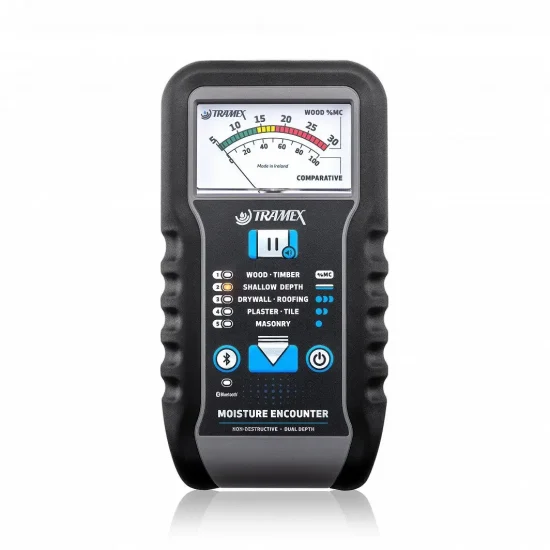
We use a non-destructive moisture meter to detect elevated moisture levels within walls, floors, ceilings and other building materials without causing damage. This professional-grade tool measures moisture at both surface and deeper levels, allowing us to identify hidden dampness, water ingress and moisture-related defects that may not be visible during a visual inspection. It is particularly effective for locating rising damp, roof leaks, subfloor moisture and areas at risk of timber decay — common issues in many Melbourne properties built on reactive clay soils.

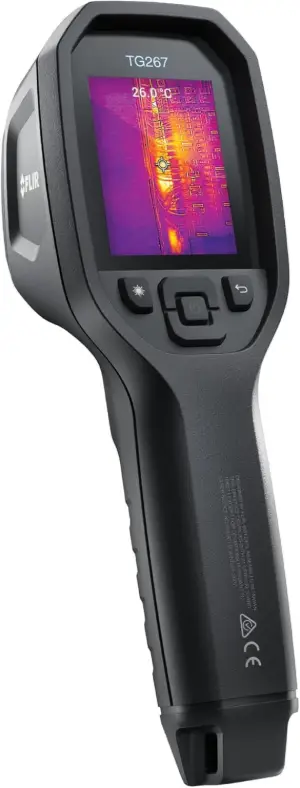
Our inspections also utilise a thermal imaging camera to identify temperature variations that can indicate underlying building issues. Thermal imaging allows us to detect problems such as moisture intrusion, insulation gaps, overheating electrical components and areas of heat loss — all without invasive testing. By highlighting hot and cold spots within building elements, thermal imaging helps pinpoint concealed defects quickly and accurately, providing valuable insight into issues that may otherwise go unnoticed during a standard visual inspection.
A dilapidation inspection records the existing condition of a property before nearby construction, demolition, excavation, or infrastructure works begin. It documents any existing cracks, movement, or defects to protect property owners if damage occurs later.
A dilapidation inspection includes a detailed visual assessment of accessible areas, supported by high-resolution photographs and clear descriptions of existing defects, cracks, and conditions.
Dilapidation inspections are recommended for homeowners, property managers, builders, and developers when construction or excavation is planned nearby.
The inspection should be completed before construction or demolition works commence to ensure the property’s condition is accurately recorded.
All safely accessible areas of the property are inspected, including external walls, internal rooms, fences, driveways, and surrounding structures. Any inaccessible areas are clearly noted in the report.
Most dilapidation inspections take between 1 to 2 hours, depending on the size and complexity of the property.
Your dilapidation report is typically delivered within 24 hours, providing fast documentation when timelines are tight.
Yes. Elevate Building Inspections provides dilapidation reports throughout Melbourne and the north-eastern suburbs, including Doncaster, Templestowe, Doreen, Diamond Creek, Eltham, Greensborough, and surrounding areas.
In some cases, a Melbourne council, building surveyor, or permit condition may require a dilapidation report before construction, demolition, excavation, or major building works begin. This is particularly common when works are close to neighbouring properties, public assets, footpaths, roads, retaining walls, or adjoining structures.
Even when a dilapidation report is not formally required, it is often strongly recommended as a protective record before works commence.
A dilapidation report is usually organised by the builder, developer, project manager, property owner, or contractor responsible for the upcoming works. In residential projects, the homeowner may also arrange the report directly before renovations, extensions, excavations, or knockdown rebuilds begin.
For larger developments, the report may be requested as part of council permit conditions, asset protection requirements, or construction risk management processes.
If a neighbouring property owner refuses access, the inspector cannot force entry onto the property. However, the attempted access can usually be documented, and the report may include notes confirming that access was requested but not granted.
In some cases, the inspection may still record visible external areas from the street or accessible boundaries. Keeping a clear record of communication and access attempts can help demonstrate that reasonable steps were taken before works began.
A dilapidation report is highly recommended before excavation works, especially where digging occurs close to neighbouring buildings, retaining walls, driveways, fences, footpaths, or underground services. Excavation can increase the risk of ground movement, cracking, settlement, and structural impact on nearby properties.
Having a report completed before excavation begins creates a clear condition record and can help protect builders, developers, and property owners if concerns are raised later.
Before construction begins, protect your property and interests. A dilapidation report documents the existing condition of nearby buildings to help prevent disputes and liability during or after works.