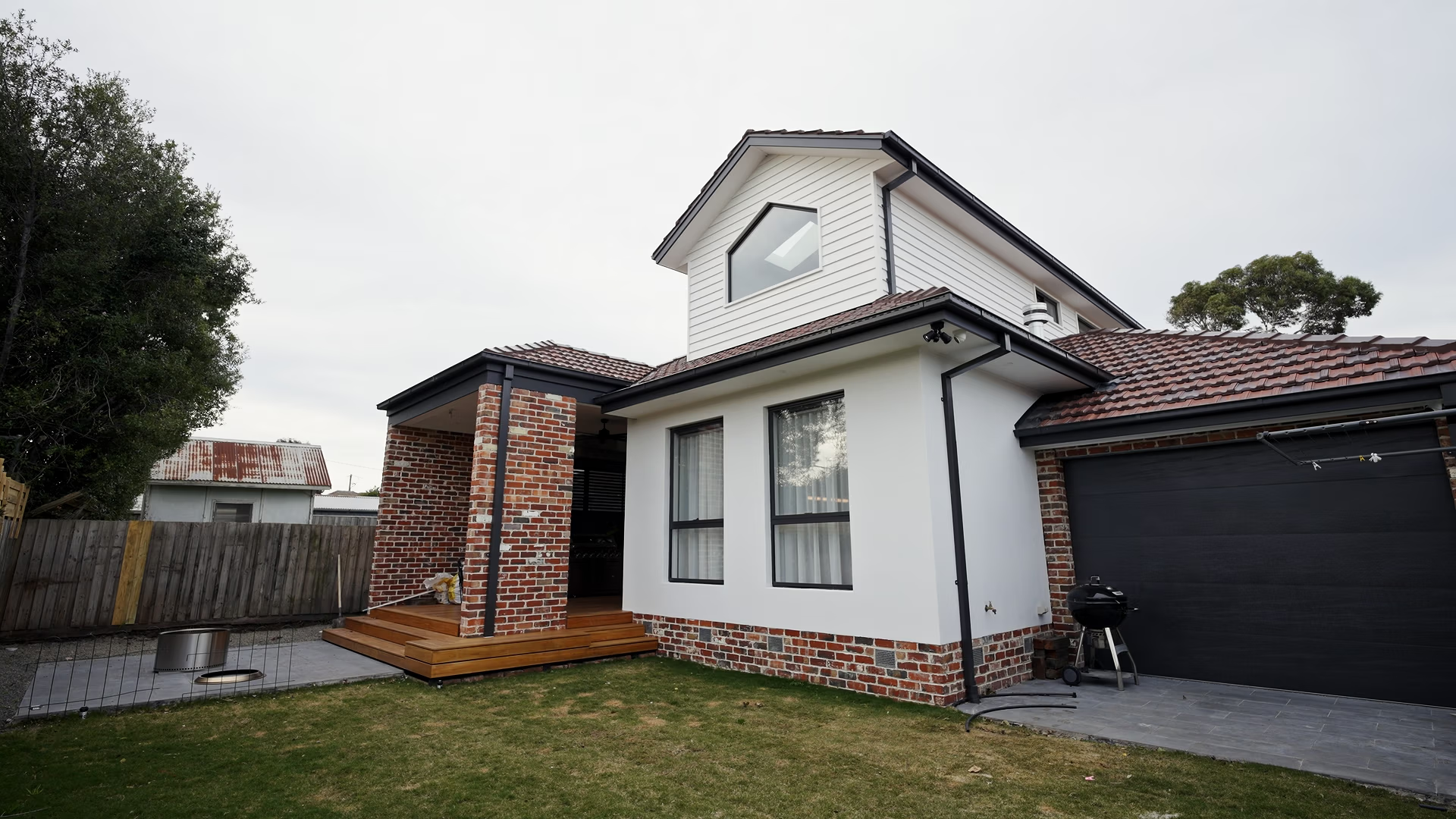
If your family has outgrown your existing home but you don’t want to move, an extension can create the additional space you need while allowing you to remain in the location you already love.
The next question is whether you should extend outward at ground level or build upward with a second storey.
There isn’t one answer that suits every property.
Block size, existing structure, planning requirements, budget, outdoor space and the type of rooms you want to add can all influence which home extension is more appropriate.
What Is a Ground-Floor Extension?
A ground-floor extension increases the home’s footprint.
It is commonly positioned towards the rear or side of an existing property and may provide:
- A new kitchen
- Dining area
- Family room
- Additional bedroom
- Bathroom
- Laundry
- Home office
- Improved indoor-outdoor connection
For many established Melbourne homes, a rear extension can transform how the property functions.
Original bedrooms and formal spaces may remain towards the front while the rear becomes a larger contemporary living zone.
This is particularly common when renovating older Melbourne homes.
Benefits of Extending at Ground Level
Stronger Indoor-Outdoor Connection
A rear extension can create direct connections between the kitchen, living spaces and backyard.
Large doors and windows can also introduce considerably more natural light.
Potentially Less Structural Complexity
A ground-floor addition doesn’t require the existing home to support an entire new level.
However, structural work can still be substantial depending on how the addition connects with the original building.
Accessible Living
Keeping primary living spaces on one level may also suit homeowners considering longer-term accessibility.
Ground-Floor Extension Considerations
The biggest limitation is land.
Extending outward reduces available outdoor space and may not be suitable for smaller blocks.
Site coverage, setbacks, private open space, neighbouring properties and other planning requirements may also influence the size and location of the addition.
What Is a Second-Storey Extension?
A second-storey extension adds another level above some or all of the existing home.
The new floor might contain:
- Bedrooms
- Bathrooms
- A parent retreat
- Children’s retreat
- Home office
- Additional living space
This can substantially increase internal floor area without consuming the backyard.
Benefits of a Second-Storey Extension
Preserve More of Your Block
Building upward can be particularly valuable on smaller sites where sacrificing the backyard would significantly affect how the property functions.
Create Separation Between Living Zones
Bedrooms and private areas can be positioned upstairs while kitchens, dining and everyday living remain downstairs.
Add Significant Floor Area
A second level can create a substantial amount of additional space without increasing the building footprint to the same degree.
Second-Storey Extension Considerations
Building upward can be structurally more involved.
The existing foundations, framing and load-bearing elements need to be considered when determining whether and how the property can support another level.
Engineering, roof removal, temporary protection, stairs and structural strengthening may all form part of the project.
There can also be planning considerations involving height, overlooking, overshadowing, neighbourhood character and heritage controls.
What About Period Homes?
The decision becomes particularly interesting when extending Victorian, Edwardian and other character homes.
A rear ground-floor addition may allow the traditional front portion to remain relatively intact while introducing contemporary living spaces behind it.
A second-storey addition may provide the required space without consuming the backyard, but its visibility and relationship with the original roof form can require careful consideration.
If this describes your property, read our guide to renovating a period home in Melbourne.
For Victorian properties specifically, we’ve also covered how to modernise a Victorian home without losing its character.
How Do Heritage Controls Affect Extensions?
Heritage controls can influence either approach depending on the property.
It shouldn’t be assumed that a heritage overlay prevents an extension.
Instead, the design may need to respond to particular characteristics of the existing property or streetscape.
Our guide to heritage overlays vs heritage-listed homes provides a useful starting point for understanding the terminology.
Property-specific requirements should then be investigated as part of the planning process.
Which Extension Costs More?
It is tempting to compare extension options using a single cost-per-square-metre figure, but that can oversimplify the decision.
Building upward may introduce additional engineering, structural strengthening, scaffolding, roof alterations and construction complexity.
Ground-floor extensions can involve excavation, foundations and site works and may become more complicated where access is restricted.
The rooms being added also matter.
A 40m² extension containing a kitchen and bathroom can have a very different cost profile from 40m² primarily containing bedrooms.
Read our complete guide to home extension costs in Melbourne for a better explanation of the variables involved.
Second Storey vs Ground Floor Extension
| Consideration | Ground Floor | Second Storey |
|---|---|---|
| Backyard | Reduces available land | Preserves more outdoor space |
| Structural work | Varies by project | Existing structure requires careful assessment |
| Indoor-outdoor connection | Excellent potential | Primarily retains existing ground-level relationship |
| Smaller blocks | Can be difficult | Often worth considering |
| Bedrooms/private areas | Possible | Particularly well suited |
| Kitchen/living expansion | Particularly well suited | Usually remains downstairs |
| Planning | Property dependent | Height/overlooking can add considerations |
Could You Combine Renovation and Extension?
Absolutely.
Many successful extension projects also involve substantial renovation of the existing home.
The addition may provide the extra floor area while the original property is reconfigured to improve circulation, natural light, bathrooms, storage and connections between spaces.
This is why it can be more useful to consider the project as a whole-home transformation rather than treating the extension as an isolated addition.
Should You Extend at All?
There are situations where extensive alterations and extensions begin to approach the point where rebuilding deserves consideration.
If the existing structure has significant limitations or very little of the current property would remain, compare the options in our guide to renovating, extending or completing a knockdown rebuild.
Choosing the Right Extension
A second storey isn’t automatically better for a small block, and a ground-floor extension isn’t automatically cheaper or simpler.
The right solution comes from understanding the individual property.
Elevate Building Group delivers ground-floor and second-storey extensions across Melbourne, including substantial projects involving renovation of the existing home.
Assessing the structure, block, planning considerations and your long-term requirements early can help determine whether building up, building out or combining renovation and extension will produce the strongest outcome.